

There is no shortage of technology thought leadership research.
The harder part is creating something people actually want to read and act on.
That challenge has only become more pronounced as AI makes producing content faster and cheaper. For technology brands, particularly those selling into complex B2B markets, simply publishing more is unlikely to be enough.
Our view is that original research can solve a different problem (see our previous insights): giving a brand something authentic and credible to say. And, without the “AI slop”.
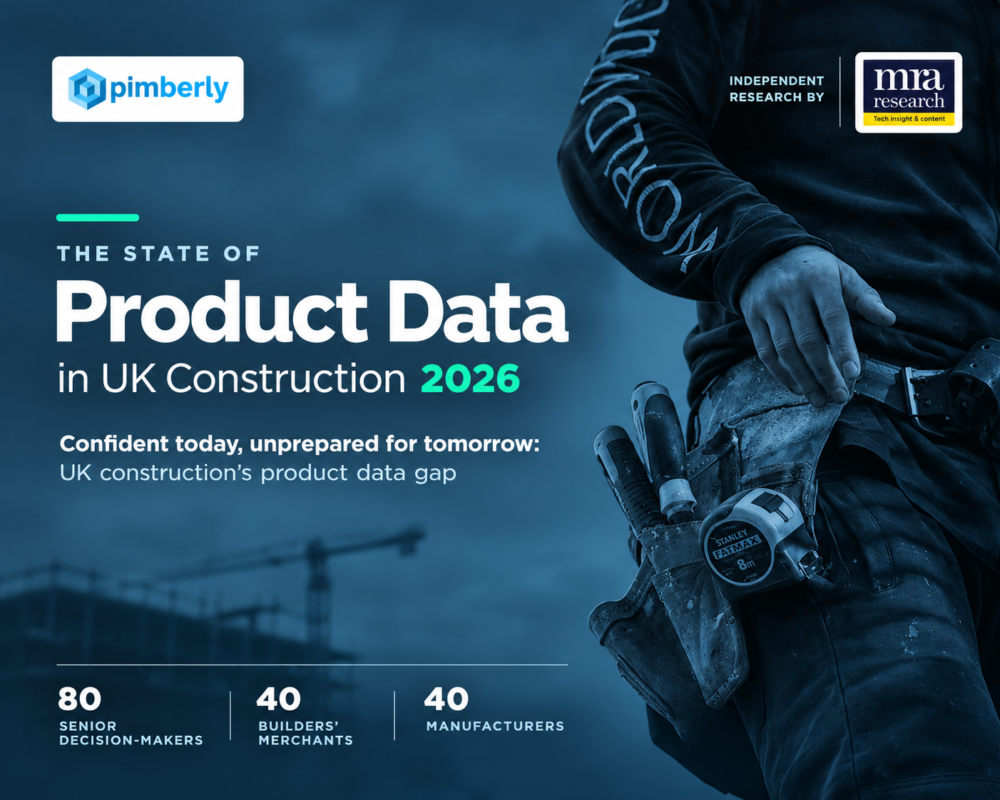
Our recent work with product information management technology company Pimberly is a perfect example. The research began as an investigation into product data and digital transformation in UK construction. It went on to generate a major industry report, media coverage, podcasts and articles, target-account engagement and, importantly, commercial influence.
Start with the market problem, not the report
Good thought leadership research should not begin with the question: “What can we publish?”. It should begin with: “What does our market need to understand?”.
For Pimberly, the opportunity sat at the intersection of product data, e-commerce, AI and digital transformation.
We (MRA Research) surveyed 80 relevant senior decision-makers at builders’ merchants and building product manufacturers, all within organisations turning over at least £25 million. The quantitative research was complemented by eight in-depth interviews.
That combination gave the research strength and colour. The quantitative study established the size of the issues. The interviews explained what was actually happening inside businesses and gave the report a much more human voice.
And the findings gave Pimberly plenty to talk about.
92% faced at least one product data challenge. Businesses were losing an average of 26 hours every week managing and fixing product data, while 34% had lost or missed sales because of poor data.
The technology story was particularly interesting. 69% were already using AI or automation, yet only 30% managed product data centrally. In other words, the technology was arriving faster than the data foundations underneath it.
That is much more powerful than simply saying product data matters. It gives a technology company an evidence-backed point of view.
One research project became a content engine
The finished State of Product Data in UK Construction 2026 report was the flagship asset. But, the report itself was only the starting point.
The findings created stories around AI readiness, e-commerce, regulation, Digital Product Passports, digital maturity, lost productivity and the commercial cost of poor data.
The PR campaign, so far, has generated 36 pieces of coverage, 27 backlinks and an estimated reach of 44.7 million, alongside trade media features, podcast appearances and interviews.
A good research programme should not produce one PDF that receives a burst of attention and then disappears into a resources library.
It should create enough intellectual property to support months of useful content.
Attention is useful. The audience matters more.
Reach is an easy number to celebrate. However, we were more interested in what happened when people reached the research itself.
Over the first 90 days, the report page attracted 400+ unique visitors and 100+ genuine downloads. Roughly one in four visitors therefore exchanged their details for the report.
More importantly, the audience was commercially relevant.
Around half of the downloads came from construction merchants, manufacturers and distributors, while 29 individuals came from 27 named UK target accounts, including three of Pimberly’s highest-priority accounts.
People may be reluctant to share overtly promotional product content. Useful evidence about their industry gives them something they are much more comfortable discussing.
From engagement to commercial influence
The next question is inevitably whether all that activity contributes to revenue. While we can’t share the commercial details, the answer is a resounding “yes”.
Pipeline is being influenced and revenue benefits are being felt.
An important note to add… A senior decision-maker may read research, see a LinkedIn post, encounter a media article, attend a webinar and speak to a salesperson months later. Expecting one report download to receive 100% of the revenue credit misunderstands how complex B2B technology purchases happen.
The better question is whether the research is reaching the right accounts, creating engagement and helping the brand become part of the buying conversation.
What technology marketers can take from it
First, the research was built around a commercial market issue rather than the product. Pimberly had a clear relevance to the story, but respondents were not being asked to endorse a vendor.
Second, it generated findings worth repeating. “Product data is important” is not a story. Losing 26 hours every week to it is.
Third, quantitative and qualitative research worked together. Statistics created the headlines, while conversations with people in the market explained why those numbers existed.
Finally, the research was designed with activation in mind from the start. PR, social content, interviews, podcasts and follow-on articles were not afterthoughts.
That principle applies whether a technology business is selling cybersecurity, cloud infrastructure, AI platforms, enterprise software or connected technology.
Original research gives technology brands something they can own
Technology companies increasingly need to demonstrate expertise before a buyer ever speaks to sales. Original research can help them do that because it gives the organisation evidence competitors do not have.
Done properly, it can establish a market position, give journalists and influencers something worth talking about, strengthen search visibility and create content that continues working long after launch week.
Pimberly’s campaign is still developing, so the final commercial outcome is not yet known. But the early results demonstrate why we see research-led content as more than a marketing asset.
At its best, it creates a conversation with the market and gives the right buyers a reason to join it.
Want to build a research-led content programme around an issue your market genuinely cares about? MRA Tech Research works with technology businesses to turn original insight into authoritative reports, campaigns and commercial content. Contact Callum Budd at callum@mra-research.co.uk.
Related case study: Akeyless
See how MRA Tech Research helped Akeyless turn original cybersecurity research into a flagship AI agent security report and a wider thought leadership campaign.