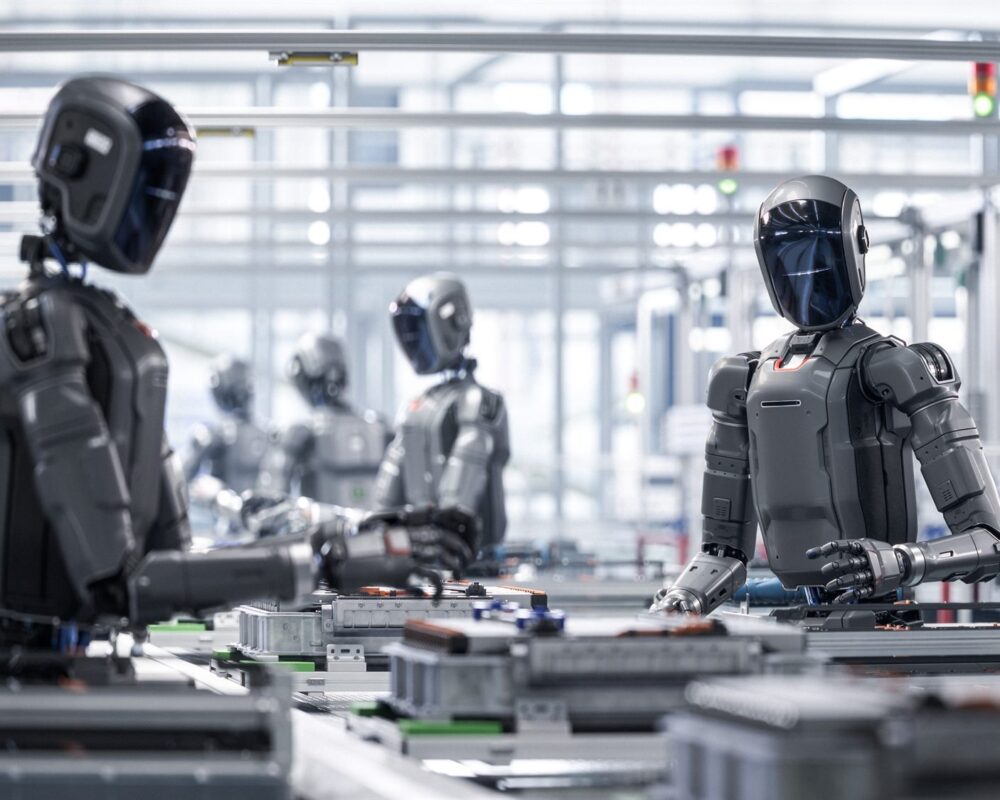

For most people, the recent AI revolution has happened on a screen. We ask a question, generate an image, analyse data or give an AI agent a task. The consequences largely remain within the digital world. Physical AI changes that.
It gives intelligent systems the ability not simply to analyse or recommend, but to perceive what is happening around them, make decisions and act in the physical world. NVIDIA describes Physical AI as enabling autonomous systems such as robots and self-driving vehicles to perceive, reason and perform complex actions in real-world environments (NVIDIA).
That potentially takes AI into a very different phase.
And, from our perspective working across AI, cybersecurity and technology research, it changes the questions organisations need to ask.
Physical AI could become much bigger than robotics
It is tempting to hear “Physical AI” and immediately picture “humanoid robots”. They are certainly part of the story, but the opportunity is much broader.
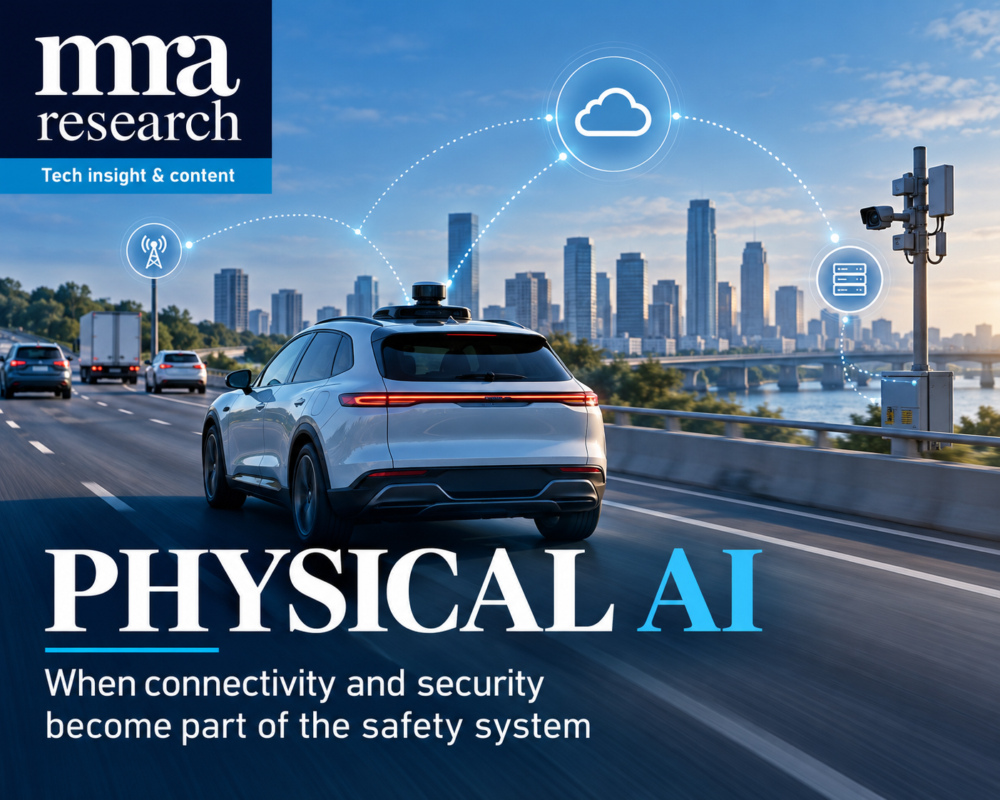
Connected vehicles, industrial machinery, logistics systems, energy infrastructure, healthcare devices and smart buildings can all combine sensors, connectivity and AI to make increasingly autonomous decisions.
The numbers suggest this convergence is already gathering pace.
Transforma Insights expects the number of AI-enabled IoT connections to grow from 1.8 billion at the end of 2024 to 11.3 billion by the end of 2035. It also highlights the growing movement of AI processing onto connected devices themselves, rather than relying entirely on centralised cloud infrastructure (Transforma Insights).
That matters because putting intelligence closer to the physical world can improve response times, privacy and performance. But, it also creates a much more demanding technology environment.
When AI acts physically, reliability has a different meaning
If a chatbot takes several extra seconds to respond, it is irritating. If an autonomous machine receives information too late, loses connectivity at the wrong moment or acts on compromised data, the consequences can be much more serious.
This is why Physical AI makes connectivity part of the application itself.
Many emerging systems will need to move constantly between on-device processing, edge infrastructure and cloud resources. Ericsson and SoftBank, for example, demonstrated in 2026 how robotics workloads could dynamically switch between local processing and mobile edge computing, using low-latency and highly reliable network connectivity to maintain operation (ericsson.com).
That creates a significant shift in what connectivity providers are being asked to deliver. Coverage and bandwidth still matter. But increasingly, customers may also care about predictable latency, resilience, workload prioritisation and what happens when the network does not behave as expected. For technology providers, those requirements need to be understood at the level of the actual use case rather than treated as generic infrastructure needs.
Cybersecurity becomes physical too
There is an equally important security question.We have already seen through our AI agent security research that giving AI greater autonomy can expose weaknesses in identity, credentials and access controls. Physical AI extends that challenge.
A compromised digital AI system might expose information or make a poor recommendation. A compromised connected vehicle, industrial system or piece of autonomous equipment could potentially affect the physical environment.
This is one reason cybersecurity guidance is increasingly looking beyond traditional IT.
NIST’s latest Operational Technology security guidance covers systems that directly interact with the physical environment, including industrial controls, transportation and Industrial IoT. Crucially, it highlights the need to balance cybersecurity with performance, reliability and safety requirements (NIST Computer Security Resource Center).
Its 2026 IoT guidance also puts greater responsibility on manufacturers to consider cybersecurity throughout the product lifecycle, rather than leaving customers to solve those risks after deployment (NIST).
As AI becomes embedded into those systems, security and safety become increasingly difficult to separate.
The biggest challenge may be trust
From our work researching emerging technologies, we repeatedly see the same pattern. The industry understandably becomes excited about what a new technology can do. Buyers quickly move on to another set of questions.
Can we rely on it? How will it integrate with what we already have? Who controls the data? What happens if something goes wrong? How secure is it? And where should a human still be involved?
Those questions are likely to become even more important with Physical AI because the perceived risk is higher.
A manufacturer considering autonomous equipment will have different thresholds for reliability and control from a consumer experimenting with a generative AI application. A healthcare organisation will have different concerns again.
That means the Physical AI market should not be treated as one audience moving towards adoption at one speed.
Technology providers need to understand readiness, not just opportunity
The scale of the potential Physical AI market is understandably attracting attention. But, market size alone tells businesses relatively little about how quickly customers will actually adopt a technology.
There is another layer of questions that research needs to answer:
- Which Physical AI applications do organisations genuinely see value in?
- What would stop them adopting them?
- Where do concerns around connectivity, cybersecurity or control become deal-breakers?
- Which organisations are ready for autonomous systems today, and which still need convincing?
- What evidence would increase confidence?
These are not simply product questions. They affect positioning, messaging, go-to-market strategy and where technology businesses should invest. Our view is that the winners in Physical AI will not necessarily be the companies promising the greatest level of intelligence or autonomy.
They may be the businesses that make that intelligence reliable enough, secure enough and trusted enough to operate in the real world.
That is when Physical AI moves from an interesting technology trend to something organisations are prepared to depend on.
Want to understand how buyers are approaching Physical AI, IoT, connectivity or other emerging technology markets? MRA Tech Research helps technology businesses uncover customer priorities, test market readiness and turn original research into authoritative content. Contact Callum Budd at callum@mra-research.co.uk.